Automatic Defrost vs. Cold Wall Manual Defrost
Modern Ice Equipment & Supply
Wich Ice Merchandiser Is Right for Your Operation?
When selecting a Leer Ice Merchandiser, one of the most important decisions you’ll make is choosing the right defrost system. While both Automatic Defrost and Cold Wall Manual Defrost merchandisers are designed to keep packaged ice frozen and ready for customers, each system offers distinct advantages depending on your operating environment.
Understanding how these systems work, and where they perform best, can help maximize equipment efficiency, reduce maintenance, and extend the life of your merchandiser.
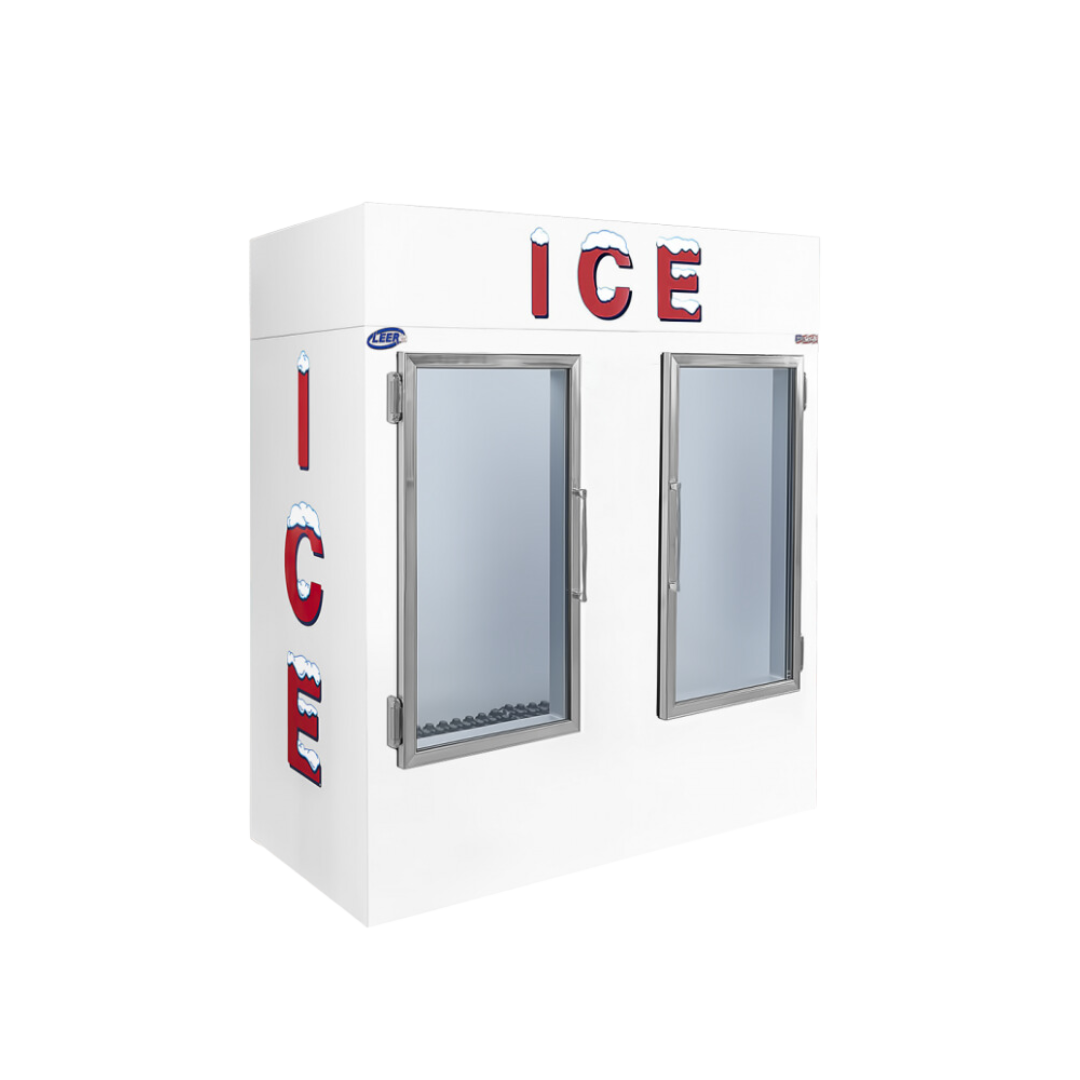
Why Do Ice Merchandisers Need a Defrost System?
Every refrigerated merchandiser naturally collects moisture from the surrounding air. As warm, humid air enters the cabinet when customers open the door, that moisture freezes onto the cooling surfaces.
Without a defrost system, frost would continue accumulating, reducing cooling efficiency, restricting airflow, and eventually affecting storage capacity and performance.
Leer Merchandisers use one of two primary methods to manage frost:
- Automatic Defrost
- Cold Wall Manual Defrost
Both are proven technologies, but they’re designed for different operational priorities.
What Is Automatic Defrost?
Automatic Defrost merchandisers remove frost automatically without requiring operator intervention.
These units use an evaporator assembly, typically mounted in the ceiling of the cabinet, along with circulating fans that distribute cold air throughout the merchandiser. As frost forms on the evaporator, the system periodically enters a programmed defrost cycle. A heating element melts the accumulated frost, allowing the water to drain safely away from the cabinet.
For outdoor installations, the water typically drains directly beneath the unit. Indoor applications generally utilize a condensate evaporation system that collects and evaporates the water automatically.
Benefits of Automatic Defrost
Minimal Maintenance
The defrost process occurs automatically, reducing the need for manual labor and routine maintenance.
Faster Temperature Recovery
After customers open the door, circulating fans quickly restore the cabinet to its operating temperature, helping protect product quality.
Better for High-Traffic Locations
Stores with frequent customer access experience greater moisture infiltration. Automatic Defrost systems continuously manage frost buildup, making them ideal for busy retail environments.
No Need to Empty the Cabinet
Routine manual defrosting is eliminated, allowing packaged ice to remain in the merchandiser during normal operation.
Considerations
Automatic Defrost systems include additional components such as evaporator fans, heaters, sensors, and drainage systems. While these components provide convenience, they also introduce more parts that may require maintenance over time.
Because the system periodically operates heating cycles, Automatic Defrost units typically consume slightly more energy than comparable Cold Wall models. The internal evaporator assembly also occupies a small amount of cabinet space, resulting in a minor reduction in storage capacity.
What Is Cold Wall Manual Defrost?
Do we need to add section explaining cold wall defrost like we have for automatic defrost?
Benefits of Cold Wall Manual Defrost
Simple, Reliable Design
With no evaporator fans or complex airflow systems, Cold Wall merchandisers have fewer moving parts.
Lower Maintenance Requirements
The simplified refrigeration system generally means fewer components that may require replacement during the life of the equipment.
Greater Interior Capacity
Without interior air ducts or evaporator housings, more of the cabinet’s interior is available for storing packaged ice.
Improved Energy Efficiency
Since no automatic heating cycles are required, Cold Wall units typically operate with lower energy consumption than comparable Automatic Defrost models.
Lower Initial Investment
Cold Wall merchandisers often carry a lower purchase price while still delivering dependable performance.
Considerations
Cold Wall merchandisers require periodic manual defrosting, which means additional labor and temporary downtime during the cleaning process.
Because these systems rely on natural cooling rather than forced-air circulation, they generally require more time to recover after the doors have been opened repeatedly.
Automatic Defrost vs. Cold Wall Manual Defrost
| Automatic Defrost | Cold Wall Manual Defrost |
|---|---|
| ✅ Automatic frost removal | ✅ More storage capacity |
| ✅ Faster temperature recovery | ✅ Lower energy consumption |
| ✅ Ideal for humid climates | ✅ Lower purchase cost |
| ✅ Minimal maintenance | ✅ Simpler design |
| ⚠ Slightly higher energy use | ⚠ Manual defrost required |
| ⚠ Slightly higher upfront cost | ⚠ Slower temperature recovery |
Which System Is Best for Your Operation?
The right choice depends on how your merchandiser will be used.
Automatic Defrost may be the better choice if:
- Your location experiences high humidity.
- The merchandiser is opened frequently throughout the day.
- You want to minimize maintenance and labor.
- Consistent product presentation is a top priority.
Cold Wall Manual Defrost may be the better choice if:
- Maximizing storage capacity is important.
- Energy efficiency is a priority.
- Your team can schedule periodic manual defrosting.
- Consistent product presentation is a top priority.
Automatic Defrost merchandisers typically include
Cold Wall Manual Defrost merchandisers typically include:
- Interior evaporator housing
- Circulating fans
- Air ducts
- Drain tube or condensate drainage system
- Smooth interior walls without ceiling-mounted evaporators
- No interior air ducts
- No internal drain tube
- Frost buildup directly on cabinet walls
You can also verify the configuration by checking the equipment’s model or serial information.
Not Sure Which Is Right for Your Operation?
Both Automatic Defrost and Cold Wall Manual Defrost merchandisers are trusted solutions for packaged ice storage. Neither system is universally better—the right choice depends on your environment, maintenance preferences, operating costs, and storage requirements.
If your operation experiences heavy customer traffic or humid conditions, Automatic Defrost often provides the greatest convenience and consistent performance. If your priority is maximizing capacity while minimizing energy consumption and equipment cost, a Cold Wall Manual Defrost unit may be the better fit.
At Modern Ice, our team can help you evaluate your operation and recommend the merchandiser that best supports your business goals.
We can help model what makes the most financial and operational sense for your plant — not just today, but five years from now.
Let’s review your system and build a plan that supports your production goals.

Source: Leer Ice Merchandisers: Automatic Defrost vs. Cold Wall Manual Defrost